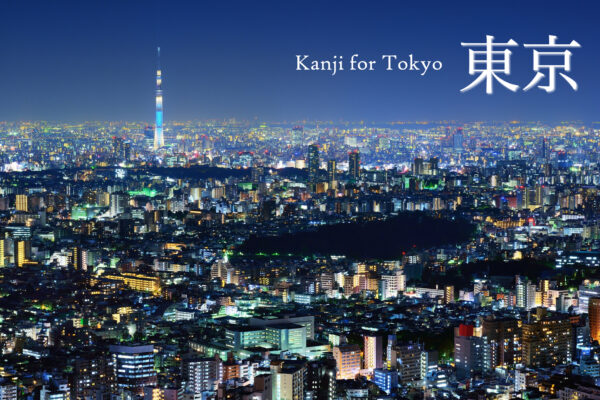
Kanji for Tokyo is 「東京」. Tokyo, pronounced Tōkyō in Japanese, is the capital of Japan.

Share this link via
Or copy link
One of the best Japanese Kanji dictionary.
Kanji pages now answer what comes after the meaning.
Words using the kanji. The common Japanese words a character appears in, with readings and meanings — 気 through 電気, 空気 and 気分.
Name readings. Kanji are read differently in names: 龍 is ryū in vocabulary but たつ or とおる in given names. Now listed separately.
Japanese audio. The speaker icons play a real Japanese voice instead of your device’s built-in synthesiser, which on some phones had none at all.
Example sentences now cover 74% of everyday kanji, up from 45%, and each page ends with other characters sharing the same radical.
New: Kanji by Meaning. Which characters mean courage, and which one would a Japanese reader choose? Each page compares them and explains the difference.
We also corrected the meaning data behind these pages. A search for courage had been returning 怯 and 臆 — both of which mean cowardly — and 55 characters carried definitions borrowed from Chinese that Japanese never had.

Kanji for Tokyo is 「東京」. Tokyo, pronounced Tōkyō in Japanese, is the capital of Japan.


When you try to study Kanji by yourself, you will notice that the shape of the characters differs so much by the fonts and get confused from which you should learn. There are countless numbers of Japanese fonts, but in this article, I will introduce the major fonts that will help you to read and write Japanese text.

There are two Kanji characters for love in Japanese – 愛, and 恋. However, the nuance is quite different. Let’s take a closer look at these characters.

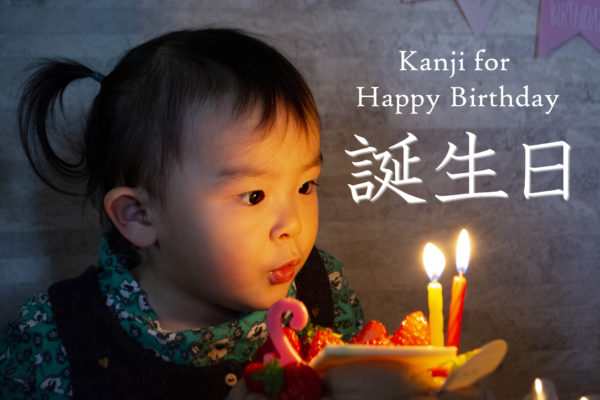
in Japanese, it has to be a combination of Kanji and Hiragana. It is written 「お誕生日おめでとう!」.

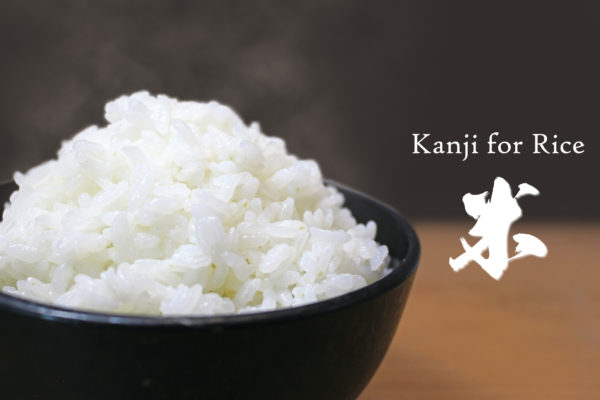
Rice is a staple food in Japan. According to the Ministry of Agriculture, Forestry and Fisheries(MAFF), about 8,607,000 tons of rice were produced in 2013. Its Kanji is 米(kome), and sometimes called お米(okome). However, there is a confusing word ご飯(gohan), meaning both “cooked rice” and “meal.” You need to guess which meaning the speaker is using by the context. By the way, the unit used to count the bowl of cooked rice is 膳(zen) or 杯(hai).

Cats are loved in Japan the same as in many other countries.
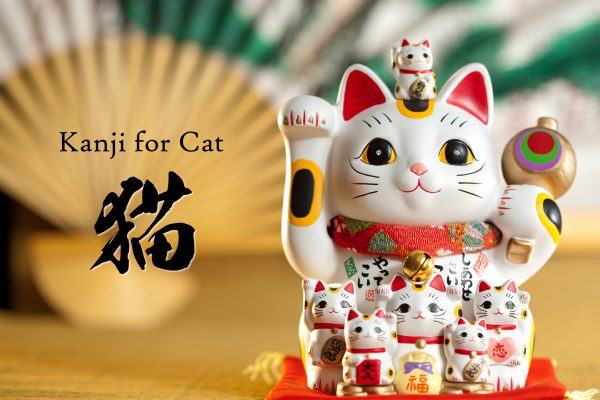
The Kanji for cats is 猫.
In this article, let me introduce words and idioms using 猫, breeds familiar to Japanese people, and a traditional cat figurine.

There are three characters representing dragons: 竜, 龍, and 辰. 竜 and 龍 simply indicate the mythical creature; on the other hand, 辰 is a concept in the zodiac used in Asia.
Let’s see what the dragons in Japan look like and where you can find them (…well, not real ones ), and take a look at a mythological tale used in comics and video games.

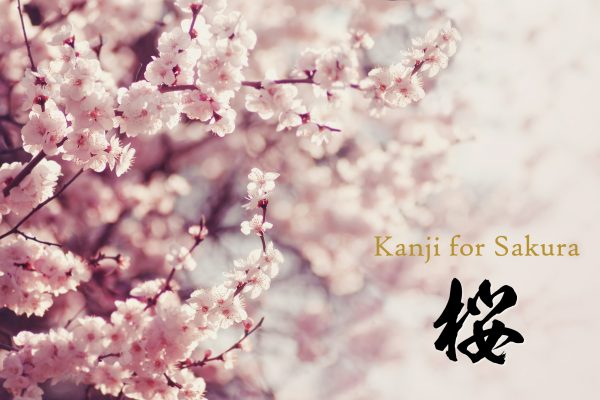
Kanji for cherry blossoms is 「桜」 and is pronounced “Sakura.” Cherry blossoms grow wild in a wide area in the temperate zones in the northern hemisphere, not just in Japan. However, the flower has always been special to Japanese people and has a strong relationship with Japanese culture valuing impermanence. Some say that Sakura is the national flower of Japan, although not officially recognized by the government.
In this article, let’s see the relationship between Sakura and Japan.

Kanji for fire is 「火」. It is a simple word, but therefore, there are many Kanji compounds, proverbs, and idioms. Let’s see how the Kanji is used in Japanese.
What is Onyomi?
Onyomi, also known as the "Sino-Japanese reading," is one of the two main reading systems for kanji characters in Japanese. It refers to the reading of a kanji character that is derived from the original Chinese pronunciation.
What is Kunyomi?
Kunyomi, also known as the "native Japanese reading," is one of the two main reading systems for kanji characters in Japanese. It refers to the reading of a kanji character that is based on the native Japanese pronunciation. Kunyomi readings are often used when a kanji character stands alone or is followed by hiragana, as in verbs and adjectives. Mastering both kunyomi and onyomi is crucial for understanding and using kanji effectively in the Japanese language.
What is Radical?
A radical, also known as "bushu" in Japanese, is a fundamental component of kanji characters. Radicals are the building blocks of kanji and are used to categorize and organize them in dictionaries. There are 214 traditional radicals, each with its own meaning, which often provides a clue to the meaning of the kanji character it forms.
What is strokes?
Stroke count, or "kakusuu" in Japanese, refers to the number of individual brushstrokes required to write a kanji character. Each kanji has a specific stroke order and stroke count, which are essential for writing the character correctly and legibly. Understanding and following the correct stroke order not only ensures proper balance and aesthetics but also makes writing more efficient and fluid.